As a Genesys Orchestrator, one lesson I've learned is that the program is constantly evolving. Requirements, badge criteria, and tier expectations can change at any time. Whether we agree with those changes or not, our role is to understand them, adapt, and keep moving forward.
For those who are working toward higher Orchestrator tiers, I'd like to share a few observations and suggestions based on my own experience.
1. Rules Can Change, Sometimes Without Much Notice
A recent example is the Maestro tier requirement.
Just last week, achieving the Maestro level required 11 badges, and now the requirement has increased to 12 badges.
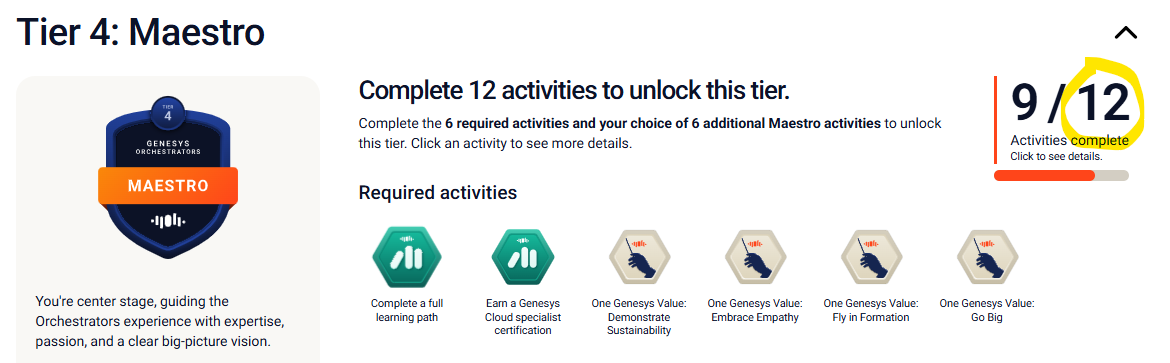
I'll be honest, if you've been working toward a target and suddenly see the requirement change, it can feel frustrating and unfair. Many of us build our plans around the published criteria and naturally expect those goals to remain stable.
However, the reality is that program requirements evolve. Whether the goal is to raise standards, encourage broader knowledge, or align with new business priorities, the change becomes the new requirement.
As Orchestrators, our best approach is not to focus on what was required yesterday, but on what is required today.
2. Not Every Badge Is Easy to Understand
Another challenge is that some badges cover topics we don't use every day.
You might find yourself facing badges related to:
- Advanced platform capabilities
- Specialized features
- Complex integrations
- Areas outside your primary role
Sometimes the learning materials are straightforward. Other times, even after multiple readings, the concepts may still feel difficult to fully understand.
This is completely normal.
Many Orchestrators come from different backgrounds:
- Developers
- Administrators
- Architects
- Consultants
- Customer Success teams
What feels easy for one person may feel extremely difficult for another.
Don't compare your progress to others.
3. Be Strategic: Target the Easier Wins First
One strategy that has worked well for me is focusing on the badges that align with my existing strengths.
Instead of immediately tackling the most complex badges:
- Review all available badge options.
- Identify the ones related to areas you already know.
- Earn those badges first.
- Build momentum and confidence.
Every completed badge gets you closer to your goal.
Once you've secured the "lower hanging fruit," you'll have more time and confidence to work on the more challenging certifications and learning paths.
Remember:
You don't need to earn the hardest badge first. You simply need to keep making progress.
4. Don't Wait Too Long
If there's one message I would emphasize to anyone planning to upgrade their Orchestrator tier, it's this:
Take action now.
From what I've observed, the overall direction seems to be toward higher standards and increased requirements.
That means:
- More badges may be required.
- Existing badges may become more comprehensive.
- New learning expectations may be introduced.
- Progress may require more effort than it does today.
None of us can predict exactly what future changes will be made, but waiting rarely makes the journey easier.
The opportunity you have today may not look the same six months from now.
My Advice to Fellow Orchestrators
- Stay informed about program updates.
- Accept that requirements can change.
- Focus on badges that match your strengths first.
- Build momentum through achievable goals.
- Don't postpone your tier upgrade plans.
- Keep learning continuously rather than cramming at the last minute.
The most successful Orchestrators aren't necessarily the ones who know everything. They're the ones who adapt the fastest when the program evolves.
Good luck to everyone working toward their next Orchestrator tier. Keep collecting badges, keep learning, and most importantly, keep moving forward.